The first thing to say about the magnificent Siberian cat, is that this is not a cat for anyone who doesn’t enjoy grooming. That coat is really something!
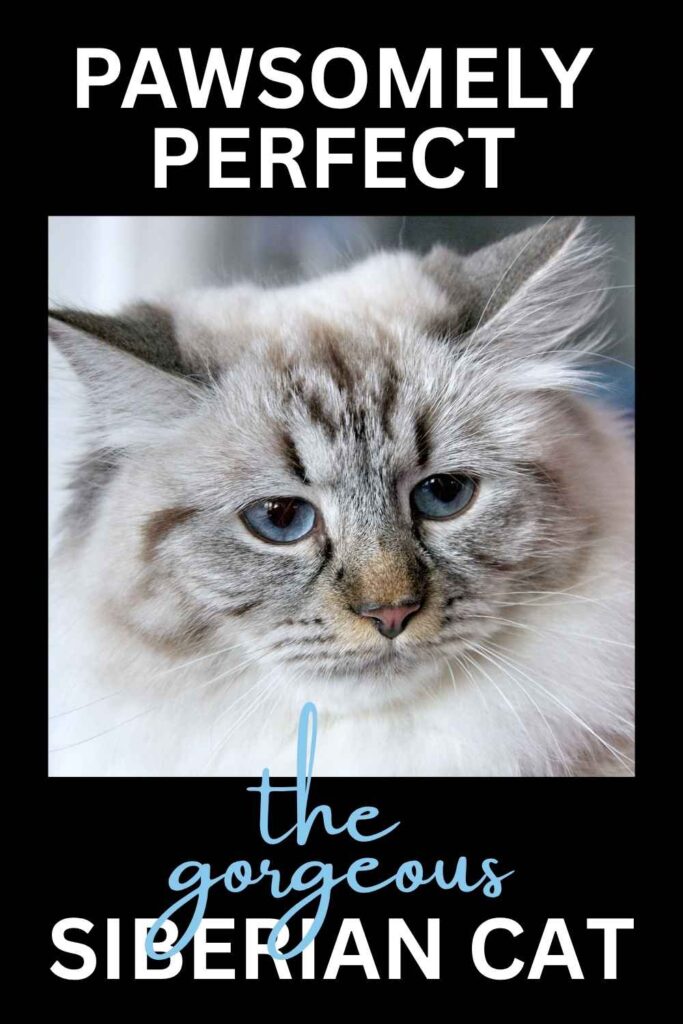
But if you are not averse to wielding a brush and comb two or three times a week, this amazing feline, could very well be the perfect addition to your family!
The Siberian cat, also called the Siberian forest cat, is an adventurous and athletically built cat who possesses a gentle and affectionate disposition.
They are a medium to large breed, weighing anywhere from 12 pounds to 25 pounds, and have a dense semi-long-haired coat, that comes in a wide range of colors.
The Siberian cat is one of the healthier cat breeds with minimal known hereditary health issues.
If you want to learn more about the Siberian forest cat look no further!
Meet The Siberian Cat
A Siberian cat is a specific breed of cat that originated in the cold weather climate of Russia.
There they are referred to as forest cats because traditionally they roamed wild in the subarctic conifer forests, or taiga, of Siberia.
This is why they are also known as the Siberian forest cat.
Because of their cold and wet environment, Siberian cats have a long, waterproof fur coat.
The Siberian is a beloved breed in Russia and has long been a popular family pet due to their easy-going and sociable nature and their patience with children.
The Fascinating History of the Siberian
The Siberian forest cat’s existence is speculated to date back a thousand years as a wild cat in the forests of Russia. References to the Siberian cat can be found in old Russian fairy-tales and children’s stories.
Even though the Siberian cat has been around for centuries in Russia, it was only recently that they were recognized as a formal breed and bred for their aesthetic qualities.
In 1871, they became part of the first cat show with only four other breeds. Records and registrations of the breed have been kept since the 1980s.
Siberian cats weren’t found in the United States until the 1990s, after the end of the Cold War, when opportunities for export opened up. The breed first arrived in Britain in 2002 and since then the number of breeders has steadily grown.
Siberian Cats: Playful, Loyal, and Smart
Siberian cats are considered to be quite smart. Some can even play fetch!
They are loyal and like to be near their owners. They enjoy the company of children and other animals.
These cats tend to be relatively quiet, and they express themselves in a melodious way through mews, trills, chirps, and deep purring.
They are natural mousers and excellent jumpers. Some of them appear to enjoy the water as well. So be prepared for your kitty to want to get wet! It is not unheard of for a Siberian cat to make a surprise visit to its owner while in the bath or shower.
The Sweet Nature of Siberian Forest Cats
This is a cat with a really nice temperament. Siberians are fearless and adventurous but also naturally calm. They are gentle and loving which shows in their sweet facial expressions.
These gorgeous kitties also love to play. Siberians adore all types of toys and remain vibrant throughout their lives.
The Siberian cat is also known for its affection and intuition. Some owners say that their cat just seems to know when they are in need of moral support.
Siberian cats are often referred to as the dogs of the feline world because they are friendly, highly adaptable, and like to cuddle in your lap. They may even come when called.
Indoor vs. Outdoor: Where Should Your Siberian Roam?
The Siberian cat originated from the rugged, wild landscape of its namesake. They once freely roamed the forests there, which may lead one to think these cats would cope well and naturally gravitate toward an outdoor existence.
However, consideration must be given to the risks presented to domesticated pets in a modern day or urban setting. There are arguments to be made on both sides of the indoor/outdoor cat debate.
One of the biggest arguments in favor of allowing your cat outdoors is related to exercise and boredom. Outdoor cats can exercise their natural instincts to prowl and hunt while getting fresh air. Indoor cats do tend to have a higher prevalence of obesity and its related health issues.
The Pros and Cons
On the other hand, outdoor cats may get more physical activity and see more excitement than an indoor cat, but it also puts them at greater risk of other serious feline diseases, parasites, injury, and poisoning.
Outdoor cats may also have altercations with other cats, dogs, or even coyotes and raccoons, which can exist in urban environments.
Some of the other common concerns are incidental poisoning (like walking through spilled antifreeze), car collisions, theft, and becoming trapped in a remote place like a neighbor’s shed.
For further consideration on this debate, check out our article, “Outdoor Cat Versus Indoor Cat.”
Just How Big Do These Forest Cats Get?
Siberian cats have a stocky and athletic build. They can range in size and weight, from medium to large, depending on gender and muscularity.
The male Siberian cat can weigh between 15 to 20 pounds. on average, but a muscular male may even reach 25 pounds! Females tend to be smaller and can weigh between 10 to 15 pounds.
Their heads are shaped like a rounded wedge and their body is barrel-shaped. Siberian cats have hind legs that are slightly longer than their front ones. Overall, they look well-balanced and rounded. They are agile and acrobatic.
Siberian Cat Coats: A Full Spectrum of Beauty
Siberian cats come in all color combinations. Their patterns and colors can be deep and dramatic.
They sometimes have white markings and can be colorpoint, like Siamese cats. There are even lynx point Siberian cats.
In general, however, they sport medium-long fur that’s tabby-patterned.
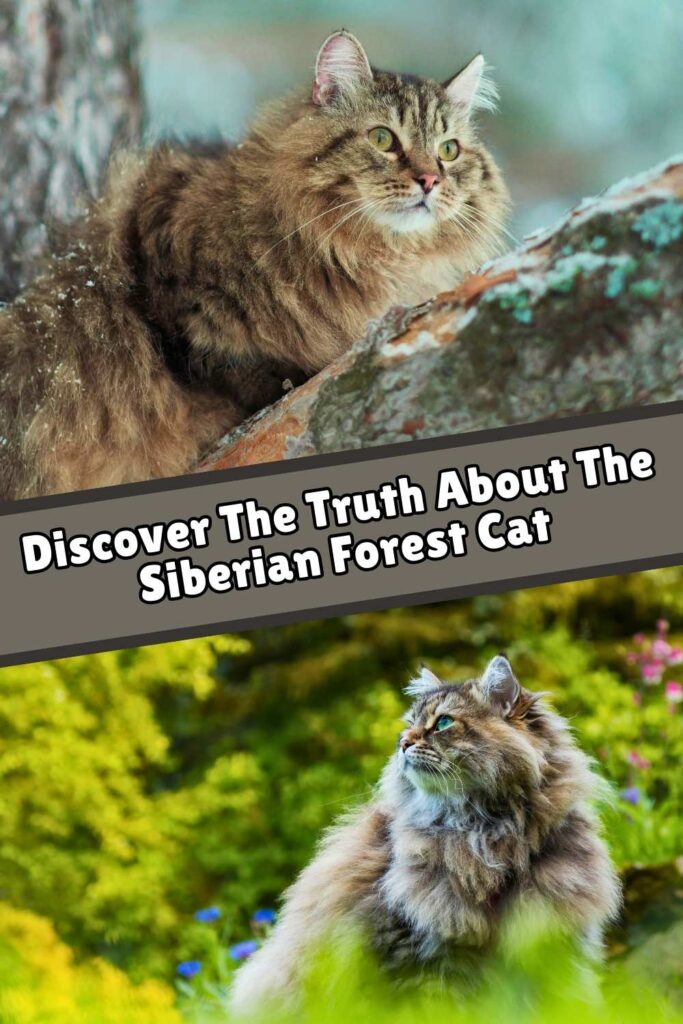
Common colors include black, white, gray, orange, and blue.
Their large, round eyes can be green, gold, or a blend between the two. Some even have eyes of two different colors!
Their Coat
Siberian cats are considered a semi-longhair breed. They have a warm and dense triple coat as a result of their icy, northern origins. Their coats are thickest in winter and shortest in the summer, and the fur is sturdy and waterproof.
They Siberian cats often have a ruff around the neck, fluffy britches, and bushy tails.
Sometimes, they will show lynx-like tipping on the ears. They may have hair on the tops of their ears that make rounded ears look more pointed.
Grooming Your Siberian: Keeping That Luxurious Coat Perfect
Although Siberians have long, lustrous fur, fortunately, it does not have a tendency to tangle or mat.
Bi-weekly grooming sessions with a steel comb are often sufficient to keep them healthy and reduce the incidence of hairballs.
Siberian cats shed their coats in the spring and the fall. During these transitions, Siberians can shed a lot and may more frequent grooming.
Shedding: What To Expect
Siberian cats do shed. However, considering how much hair they actually have, it’s not unmanageable.
Twice a year, Siberian cats shed their coat. Their longer, heavy winter coat is shed in spring, while their shorter summer coat is shed in the fall. You may wish to groom daily under these circumstances for optimal health.
Siberian Cats and Allergies: The Facts
Some breeders and others claim that Siberian cats are hypoallergenic. This has not been scientifically proven.
In fact, scientific research has not shown that any hypoallergenic cat breeds exist.
It is true that Siberian cats have less “Fel d 1,” a cat-specific allergen that people react to than some other cats.
“Fel d 1” is created in the saliva, tears, skin, and perianal glands. During grooming, it becomes distributed across the fur. The perianal glands secrete it onto feces
too.
However, “Fel d 1” only accounts for about 60 percent of cat allergies. At least 10 other substances found in cats can cause an allergic reaction. So, there are other factors to consider.
How To Find A Cat For You
Siberian cats with low allergen levels often—but not always—have kittens with low allergen levels.
If you are looking for a cat that will not trigger an allergic reaction in you or someone you love, the best way is to spend time with your potential cat.
There are no guarantees for cat allergy sufferers. However, a Siberian cat may have a lower chance of triggering allergies than other breeds.
Siberian Cat Health: Common Concerns
All cats may suffer from certain illnesses. Kidney disease, cancer, urinary crystals, and gum disease are common to many breeds.
Siberian cats are a healthy, hardy breed, in general. Studies show that they are one of the cat breeds with more genetic diversity within their population.
This makes them less prone to problems from inbreeding, however, Siberian cats are still bred for specific traits. As such, these cats are prone to certain health conditions. The most common concern for Siberian cats is heart disease.
Heart Disease (Hypertrophic Cardiomyopathy)
This hereditary disease is a major cause of deaths in house cats and a condition that can affect Siberian Forest cats. Hypertrophic Cardiomyopathy (HCM) causes the heart muscle to thicken and become rigid and leads to heart failure, fluid in the lungs, and lethal blood clots.
Did you know that thousands of research papers have been published on cat behavior and health? No time to read them all? Don’t worry – we’ve done it for you! And picked out the best bits! The Happy Cat Handbook – A unique guide to understanding and enjoying your cat!
In the Siberian cat, it can show up at any age starting from as young as one year old.
Just one defective gene from one parent can result in this disease. Some lines with heavy inbreeding suffer the most deaths.
Because Siberians are a young breed, studies are ongoing about the genetics that cause this disease.
Health Tests
DNA testing is available for HCM so ensure your breeder can provide certificates that both parents are not carriers.
Other recommended genetic testing includes:
- Erythrocyte Pyruvate Kinase Deficiency (PK)
- Polycystic Kidney Disease (PKD)
How Long Do Siberian Cats Live?
The life expectancy of a cat is based on a number of factors, including diet, lifestyle, environment, genetics, and breed.
The average expected lifespan of a Siberian cat is 12 to 15 years.
Siberian cats are sturdy and are prone to minimal genetic health issues. They are generally a long-living breed.
Caring For Your Forest Cat
In addition to their coat care needs, as discussed earlier, Siberian cats need weekly nail trimming and ear checks for signs of infection. If the inside of the ear looks dirty, gently wipe it with a damp cotton ball.
Regular teeth brushing is also recommended to prevent any dental or gum issues.
It is advised that you start these grooming habits early on with your kitten so that they become used to and accepting of them.
Do Siberian Cats Need Special Food?
Siberian cats are obligate carnivores like all cats. They require a diet that consists of quality animal protein. A good quality commercial cat food should be suitable for your new friend. But if you want to try to make your own cat food you need to consider the following.
You’ll need to provide sufficient protein for your cat. Protein helps cats build and maintain muscles mass as well as manufacture antibodies, enzymes, and hormones.
Protein also helps cats maintain proper pH balance and assists in growth and development.
Cats also require some amino acids that other animals don’t, such as taurine. Taurine is only derived from animal protein sources.
Certain types of fat provide cats with a concentrated source of energy. Omega-3 and omega-6 fatty acids are essential for cats, as are linoleic and arachidonic acids. DHA is necessary for vision, reproductive health, and the immune system.
Additionally, cats need a variety of vitamins and minerals for all their biological processes: from oxygen transportation to metabolism regulation. They need antioxidants, too.
They do not need carbohydrates. In fact, studies show that a high carbohydrate diet can contribute to obesity, type 2 diabetes, and other health issues.
Do These Beautiful Cats Make Good Pets?
Because that’s the bottom line isn’t it. It doesn’t matter how pretty a cat is, or how nice the photos look. Your cat will be a part of your family, and needs to be a companion as well as a talking point.
Fortunately, the short answer is yes! Siberian forest cats have a long history as treasured family pets in Russia and continue to be sought-after today for their gentle disposition.
These cats are known for their friendliness and patience with children and other pets. They enjoy the company of their owners and are affectionate lap cats.
Siberian cats have a playful side and are rather intelligent cats that take well to training. You may even be able to get your cat to play fetch.
So if you can find one, and you are ready for a cat, and are willing to spend a little time each week grooming, then this could be the cat for you.
Finding a Reputable Siberian Cat Breeder
Siberian cat breeders can be found all over the United States and Canada as well as in Germany and Singapore. These can be located through The International Cat Association (ICA) website.
Choosing a reputable breeder over a pet store or online and can drastically improve your chances of taking home a healthy kitten.
It is important to know if you want a pedigreed, championship-quality Siberian forest cat, or just a healthy cat for a family pet. This may make a difference in terms of finding an appropriate breeder.
You may wish to find out if the breeder is registered this can help make it more likely that your cat is healthy and has championship bloodlines.
Be sure to locate an ethical and responsible breeder. A visit to the breeder is also helpful so you can see the conditions under which the kitten lives. This can help determine how healthy your kitten might be.
Ask about health issues and about results of genetic testing. Make sure to view the results of previous parental health testing before you commit to buying from a breeder.
Bringing Home Your Siberian Kitten
Siberian kittens are usually available at 12 to 16 weeks after inoculations. These Siberian kittens mature at a slow rate and may take up to 5 years to reach full maturity.
For tips on how to properly care for your new Siberian kitten, take a look at The Happy Cat Handbook.
Also check out our article, “12 Week Old Kitten — A Complete Guide.”
Adopting An Older Siberian Cat: Giving a Feline Friend a Home
Breed-specific Siberian cat rescues do exist. And occasionally, Siberian cats also turn up in regular animal shelters.
The advantage here is that you may find a Siberian cat for a cheaper rate. However, you may not have options regarding the age of the cat or their health.
Chances are a rescue cat will not be championship-quality. If this doesn’t matter to you, adopting a Siberian from a shelter might be a good option.
But be prepared. It may take time to find a one that needs rescuing.
US Rescues
UK Rescues
Canada Rescues
Australia Rescues
Siberian Cat Mixes
Some breeders may attempt to create more allergy-friendly cats by mixing Siberians with other domestic cat types. So, Siberian mixes do exist.
Siberian mixes can be popular because they are more affordable than purebred Siberian cats.
If you can find one you would like to get, be cautious and responsible. You’ll want to make sure a kitten has the combination of qualities that you want.
You’ll also want to check on the kitten’s health. Both parents should be tested for any potential genetic issues.
Siberian mixes don’t have too many hereditary health problems but other cat breeds might.
Pros And Cons Of Getting A Siberian Cat
Getting a pet it a big, and long term, responsibility. It is important that you find the right cat for you and your family. Let’s look at the pros and cons of owning a Siberian cat.
Pros
- Enjoys the company of their owner
- Gentle, affectionate, and playful
- Good with children and other animals
- Low allergen levels
- Minimal hereditary health risks
Cons
- Bi-weekly (or more) grooming needs
- Can be a large and heavy cat
- Expense
- Shedding seasons
Should I Get A Siberian Cat?
That depends. Now that you’ve learned all the basics about Siberian cats, you can hopefully make an informed decision.
These cats have great personalities. They love to play, they get along well with animals and children, and they also love to cuddle. A family setting or place where they can interact with others would be a great fit.
These are gorgeous kitties with long fur and sweet faces.
They are a hardy breed that doesn’t have too many hereditary health issues, however, they are prone to heart disease.
A Siberian cat might be the one for you if you’re looking for a playful but affectionate companion and don’t mind some shedding,
Do you own a Siberian cat? What is your cat’s personality like?
Do you want one?
Let us know in the comments!
Leave a Reply