Despite being almost unheard of thirty years ago, dwarf cats, teacup cats and miniature cats have become hugely popular in a relatively short space of time.
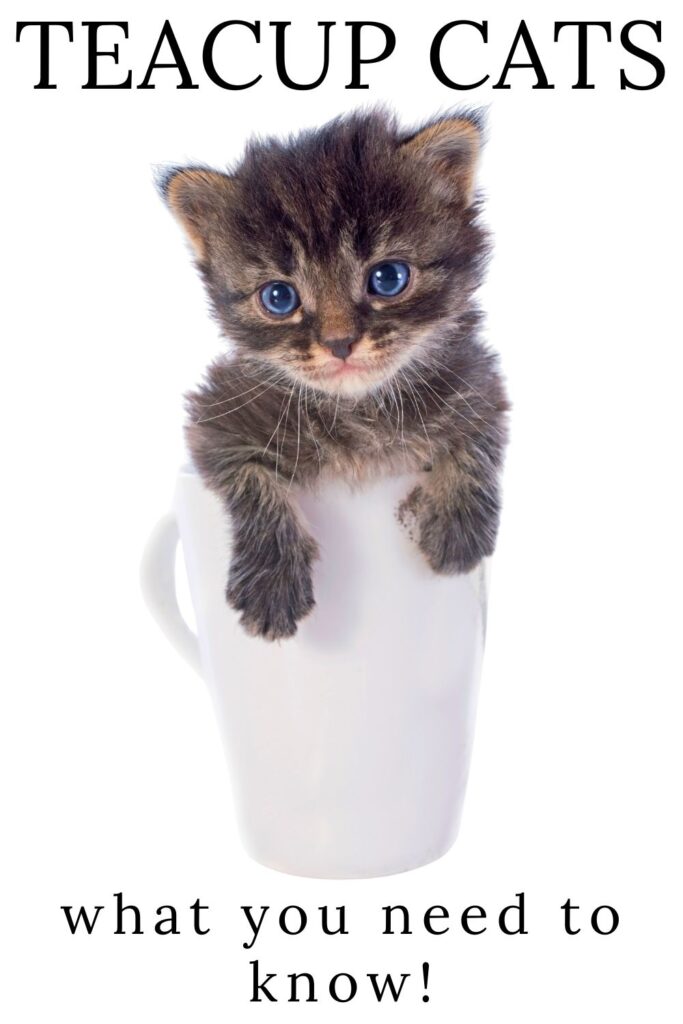
With more and more prospective cat owners researching miniature cat breeds and teacup kitten prices, we take a look at these new cats on the block, and the things to consider before bringing one home.
The origins of miniature cats
Anecdotes of dwarf cats have been recorded since at least the 19th century, and there’s evidence that dwarf lines of familiar cat breeds often cropped up briefly before drifting out of existence over the course of the 20th century.
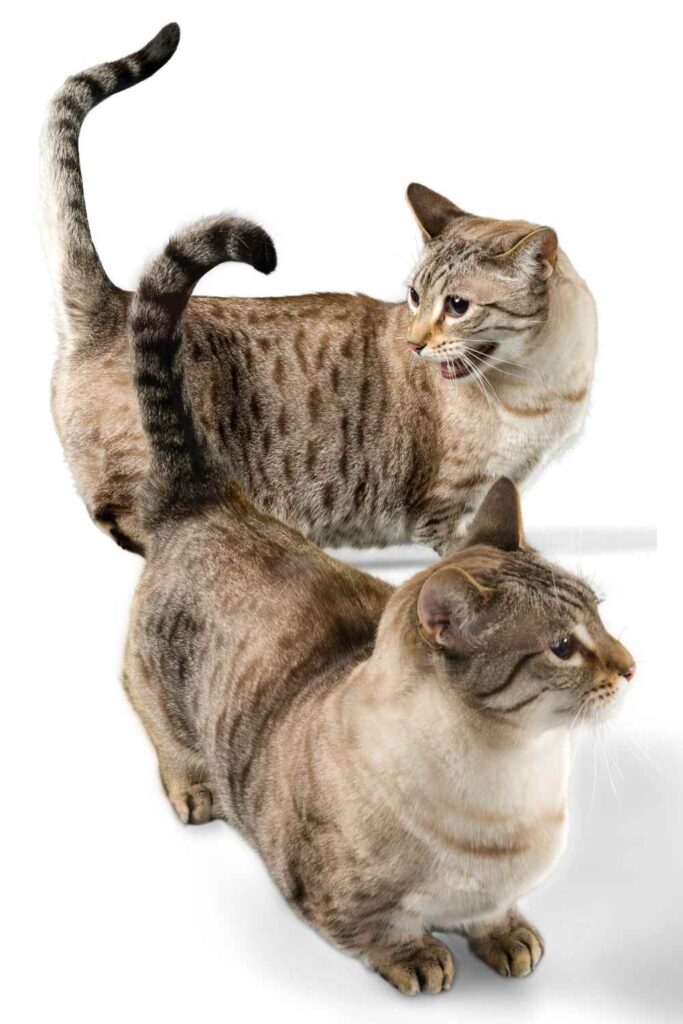
Then, like buses, two types of extra small cat appeared at once in the early 1990s. And instead of dying out again, this time a new market for them exploded overnight.
Those cats were the Munchkin cat and the Persian teacup, and they have different reasons for being small.
Unpicking the difference between dwarf cats and miniature cats
Because extra small cats are so new on the scene, there’s still a lot of confusion about how to describe them, and it helps to lay out the basics before we go further.
Put simply:
- Dwarf cats have short legs on a normal-sized body, caused by a hereditary change in how their bones grow.
- Miniature cats are small all over, but proportioned like their full-sized relatives.
Terms like “teacup”, “micro” , “mini” and “ultra-micro” are informal marketing labels, not officially recognized size categories by major cat registries.
Now, let’s see how that applies to our Munchkins and our Persian Teacups.
Munchkin cats – the dwarf cats
Munchkin cats carry a dominant genetic mutation affecting cartilage growth, which gives them short legs in proportion to the rest of their body. Recent studies link this to the UGDH gene.
They were the first dwarf breed of cat to receive recognition as pedigree in their own right — and the foundation of the breed was about as close to an accident as it’s possible to get.
In 1983, a teacher in Louisiana adopted an ordinary-sized stray female cat. When she delivered a litter of kittens, half of them were born with short legs.
One of the dwarf tom kittens lived the life of Riley as an unneutered outdoor tom, and soon dwarf cats were cropping up all over the neighbourhood and being sold further afield.
In 1994, Munchkins were recognized in TICA’s New Breed Development Program, and a pedigree was born.
Because two copies of the Munchkin gene are lethal to unborn kittens, responsible breeders never mate two Munchkins together.
Teacup Persian Kittens and Cats
Persian cats can also be born unusually small, but teacup Persians do not have the dwarf mutation. They are just very small, normally proportioned Persian cats.
So how do you miniaturize a Persian cat?
Selective breeding. The smallest cats of each generation are bred together so that their offspring become smaller and smaller.
Some breeders argue that this has been made possible by another hereditary condition equivalent to primordial dwarfism in humans, but there is still no genetic evidence to support this.
Full grown teacup cats – how small do they stay?
Munchkin cats tip the scales at 4lb to 9lb, compared with the average cat which weighs 10lb to 11lb.
Miniature Persians peak at a diminutive 4lb to 5lb, but there are breeders offering “ultra-micros” which barely nudge 2lb.
Because “teacup” isn’t a regulated term, size varies widely — and claims of extreme tininess should be treated with caution.
Experimental miniature cat breeds – are there teacup Bengal kittens?
The rise of Persian teacups has inspired people to search for tiny versions of other breeds, such as miniature Siamese cats and teacup Ragdoll kittens.
These don’t exist yet, but unfortunately there are unscrupulous breeders who falsely advertise runts and malnourished kittens as teacup varieties.
These kittens will have a lot of health problems, and purchasing them supports inhumane breeding.
New varieties of dwarf and miniature cats
Meanwhile, TICA has acknowledged some new dwarf and miniature varieties with Experimental Breed status:
- the Lambkin (Munchkin x Selkirk Rex)
- the Skookum (Munchkin x LaPerm)
- the Minskin (Munchkin x Sphynx)
- the Minuet/Napoleon (Munchkin x Persian) now fully recognized by TICA
- the Genetta (Munchkin x Savannah x Bengal x Shorthair)
These breeds, especially the Minuet, blur the distinction between dwarf and miniature cats.
Some of them are so new their average life expectancy isn’t yet known, so it’s too soon to judge their long-term suitability as pets.
Choosing a dwarf or miniature cat
As humans we are programmed to protect and nurture anything small and vulnerable.
Dwarf cats and miniature cats tap straight into that instinct; they are undeniably very cute.
They also seem like the intuitive choice if you have a small house or apartment. So it isn’t surprising that many people find them appealing.
Here are the things to consider…
Choosing an extra small cat: temperament & traits
Munchkin cats are sociable, playful, curious and active. Despite their short legs, they are still capable jumpers and love to explore.
Miniature Persians share the traits of their full-sized counterparts: loyal, friendly, and usually docile.
Because of this they are sometimes recommended for children or older people — but remember their size can make them more fragile.
Teacup cats and miniature cats need special care
Whether Munchkins should be allowed outdoors depends on your environment.
Miniature Persians, and especially ultra-small cats, are almost certainly unsuitable for life outdoors.
The smaller they are, the more complex their care becomes.
The challenges of caring for a teacup Persian
Miniature Persian kittens are rarely ready to leave their mothers at twelve weeks, and often need to stay with her for five or six months.
They need daily grooming and are vulnerable to a range of health problems which require financial and time commitment to manage.
Health problems in Munchkin cats
Munchkin cats are generally considered robust, but orthopedic risks are higher due to their altered limb proportions.
Reported issues include:
- spinal curvature (lordosis)
- chest deformities
- increased risk of osteoarthritis and mobility challenges
- joint strain from everyday activities
The breed hasn’t existed long enough for large-scale health studies yet, so opinions remain divided.
Health problems in miniature Persian cats
Miniature Persians are delicate animals. Being Persian, they are prone to all the same health problems as their full-sized relatives.
Selective breeding for very flattened faces is a major concern, especially in very small cats, because it exaggerates:
- breathing difficulties
- eye problems
- difficulty eating and grooming
- overheating and stress
Kidney disease and health screening
Persian cats are prone to Polycystic Kidney Disease (PKD) Genetic screening for PKD1 is widely available, and responsible breeders should provide results from both parents.
Miniature cats: the complications of getting smaller
Very small cats are vulnerable to complications linked to their size, such as:
- soft or misshapen bones
- reduced muscle mass and mobility issues
- heart murmurs or enlarged heart
- seizures or neurological problems
- soft spots in the skull (risk of head trauma)
- shortened lifespans
- malformed reproductive organs
The smaller the cat is, the more likely these problems are to occur.
Miniature cats: the controversy
Dwarf and very small cats have been bred by either preserving genetic mutations, or deliberately selecting ever smaller cats.
This has created a massive division in the cat-loving community.
Some countries restrict or prohibit breeding of dwarf cats due to animal welfare legislation, while others allow it with caution.
Many vets have spoken out against extreme miniaturization.
Until these cats have been around long enough for long-term studies, we can’t say who is completely right, but ethical concerns should be taken seriously.
Where to buy teacup cats
Owing to their controversial history and unresolved health concerns, dwarf cats and miniature cats are not widely available outside of the United States.
Specialist breeders are preferable to private ads.
Remember these breeds are new, so responsibly bred, healthy cats are still rare. Miniature cats sold cheaply are often runts or sick kittens.
A responsible breeder will be open about health risks and testing. If a breeder seems evasive, think twice.
Dwarf cat and teacup kitten prices
Dwarf cats typically cost around $1,000 and up.
Responsibly bred teacup kittens start higher and easily reach $2,000 or more — reflecting health screening and careful line management.
If a high price isn’t supported by paperwork and health testing, alarm bells should ring.
Finding teacup cats for adoption
Because numbers are small, healthy dwarf and miniature cats are not usually found up for adoption.
Free or low-cost “teacup kittens” are likely to be seriously ill.
If you are serious about bringing home one of these kittens, be prepared to research carefully, join waiting lists, and be patient.
Alternatives to teacup cats: naturally small cat breeds
If you’ve decided teacup cats are not for you, don’t despair!
These established breeds are naturally petite and more predictable in their health and temperament:
Singapura — 5–8lb
Tiny, playful, and athletic.
Cornish Rex — 6–7lb
Soft wavy coat and high-spirited personality.
Devon Rex — 6–9lb
Big eyes, cheeky nature, low-shedding coat.
Teacup cats and miniature cats — a summary
They’re nothing new, but this time dwarf cats and miniature cats are here to stay.
They have the makings of charming pets, but it’s going to be a while before we know for sure how healthy these breeds can be long-term.
If you want to be part of their future, you’ll need commitment, patience, and a good breeder.
And finally, where breeding ethics are involved, it’s important to take concerns seriously. If you meet a breeder treating kittens badly, please report it using the ASPCA guidance on reporting animal cruelty.
Do you own a teacup cat or a miniature cat?
We’d love to hear your experiences! What advice would you give someone looking for their first miniature kitten?
Please share in the comments below.

Leave a Reply